
Value Types on an Iron County Property Record
Iron County's Assessor sets both a taxable value and a fair-market value for every parcel. Neither one is a sale price. The deed shows a figure after closing. That number can differ sharply from what the tax roll carries. Assessments also snap to January 1 of each year. They record property condition and the owner of record as of that date, so a recent purchase may not appear in the annual numbers yet. Before comparing values, check which figure the property record shows. Then confirm what effective date the county applied.
| Value | What It Is | Where |
|---|---|---|
| Assessed value | The Assessor's value determination for the annual roll | Assessor / EagleWeb account |
| Fair-market value | The county estimate under its valuation process | Assessor explanation and account |
| Sale consideration | Price in a particular conveyance, if recorded or reported | Recorded deed; exact field not captured |
| Land and improvements | Separate components where the source supplies them | Assessor account or SGID attributes |
The Assessor relies on cost, income and market approaches. Its figure is a mass appraisal for assessment rather than the negotiated price of one sale. The county publishes no sample parcel card with a visible sale-price field. A deed can document a conveyance. Still, confirm whether the instrument or the account includes consideration. Do this before treating any number as the sale price.
Iron County Uses Three Valuation Approaches
The Assessor applies three standard valuation approaches: cost, income, and market. The cost approach weighs replacement cost minus depreciation. An income analysis ties value to what income-producing property earns. The market approach compares relevant sales of similar property. Which evidence carries the most weight depends on property type and available data. These are methods, not three separate value fields to add together.
Iron County values roughly 43,000 parcels and reviews market conditions every year. A parcel estimate can differ from a buyer's view of one home. The difference often comes down to features or timing. A sound comparison starts with the parcel class, the improvements, and the valuation date. It is then set against the sale or online estimate in question. The Iron County Assessor's assessment explanation describes the county's value and review process.
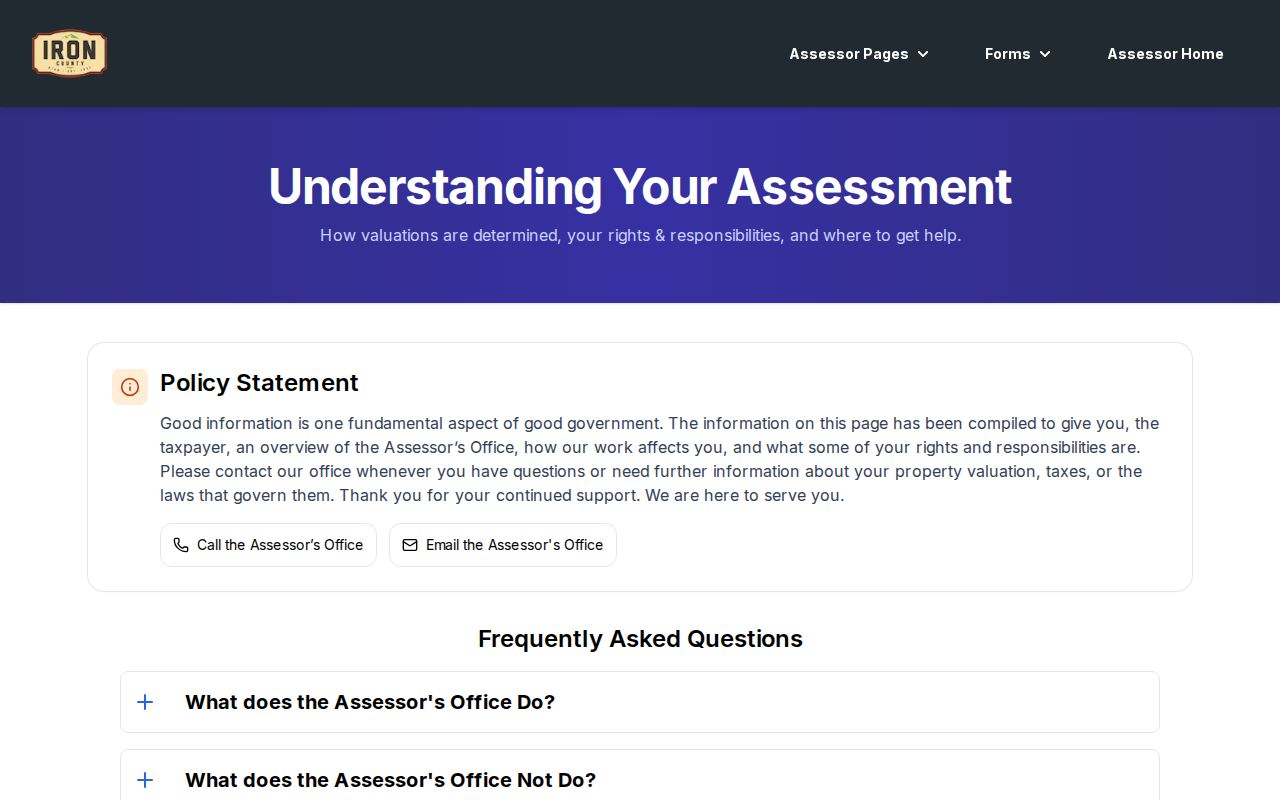
Use that explanation to understand the county's method. Then open the parcel-specific account for its own figures.
State Parcel Data Separates Iron County Land and Improvement Values
Utah's SGID parcel attributes can include land market value, improvement market value and total market value. They may also carry parcel acres, building square footage, built year and effective built year where supplied. These fields offer a separate view of the parcel. They can help identify what drives a total. They are dataset attributes. They are not a substitute for the current Assessor account or a professional appraisal. Iron County's basic parcel layer carries an August 2026 update. Its LIR layer lists 2024. Check which source produced a field, and its update date, before comparing it with EagleWeb. A different update cycle can explain apparent differences. That does not imply that one number is a sale price.
Find the Value on an Iron County Assessment Account
Use the Assessor's EagleWeb account link to locate a parcel by address or by owner information. The live form supports both. Follow the current page labels, and note the account or serial number. The county's account is the place to check assessed value and classification. The Recorder's deed can supply transfer context. The county publishes no verified sale-price field on that account.
- Open EagleWeb through the Assessor's property-account link and follow its current search prompts.
- Confirm the situs address, account or serial and property class.
- Record the assessed or market-value labels and the year shown.
- Use a recorded conveyance as transaction evidence only when its terms show the amount paid.
- Assessed value
- The Assessor's value determination for the parcel's roll.
- Fair-market value
- The county's estimate under its valuation process.
- Taxable value
- The value used in the tax calculation after applicable rules.
An Iron County Property Value Uses a January 1 Snapshot
Iron County's assessment works like a photograph taken on January 1. The tax roll records ownership and property condition as of that date. The Assessor still reviews market conditions every year. But a spring sale lands after the snapshot. So does an addition finished in summer. So match the valuation year to the date of your event. The match matters more than you might think.
A property value record is annual, not live. It does not update each time a deed hits the recorder's office. A new listing does not change it either. Compare years before you compare numbers.
What if the account misses a major feature or ignores current market evidence? Review the assessment notice first. Then contact the Assessor about its valuation and appeal process. Bills, exemptions, and appeal steps get their own treatment in the separate tax-record guide. This page stays focused on what the value fields themselves mean.
Iron County's Primary-Residence Example Changes Taxable Value
The Assessor's explanatory material uses a 55 percent primary-residence example. That ratio changes the taxable portion. It does not mean the full fair-market estimate equals 55 percent of a sale price. Check the property class and eligibility shown for the actual parcel. Do not apply the example to every home. The Iron County property tax guide explains how taxable value fits the bill. It also covers the appeal process. This distinction helps when two county records show different numbers. Compare their labels first. Then check the year, class and valuation date before concluding that one is incorrect.
Recorded Sale Price and Iron County Assessed Value Are Different
A deed records what one buyer paid on one day. The assessor's value is different: it exists to feed the county tax roll. That distinction matters. A recorded deed proves a transfer happened. The Recorder's public index does not present consideration as a searchable field. When the sale amount matters, inspect the recorded instrument itself. Ask the Recorder whether the filed copy carries the consideration data you need.
One sale also reflects terms, condition and timing. Those may not match a typical market estimate. Compare parcel, date, property class and improvements like with like. A public sale reference never substitutes for an appraisal prepared for a specific transaction.
What an Iron County Assessor Value Does Not Tell You
The Assessor's number serves the county's annual valuation process. That is its whole job. It does not promise a sale price. It does not replace a lender's appraisal or set what a buyer should offer. Timing, parcel classification, property changes and transaction terms all pull it away from market activity. Verify account details with the Assessor. Consult a licensed appraiser when a current market valuation is needed.
Value vs. price. An Iron County assessed value is used for taxation and is not an appraisal of what a property will sell for. A current transaction question calls for a qualified appraisal.
Check the Iron County Valuation Date Before Comparing Values
The Assessor's calendar starts with January 1 ownership and property condition. May 22 brings the assessment-roll deadline. Valuation notices go out by July 22. The Board of Equalization opens its appeal period in August, and appeals close September 15 at 5 p.m. These milestones explain why an improvement finished late in the year may not register like a feature present on New Year's Day. They also show why a value from one tax year should never be compared casually with a sale from another date.
For a year-to-year check, write down the assessed, market and taxable labels, the roll year and the parcel identifier. Compare the property characteristics behind the value. Ask the Assessor about any factual mismatch. If a formal review is the goal, follow the current notice and appeal instructions. The calendar is a guide, not a substitute for the filing rules. A qualified appraiser gives a transaction-specific market opinion. The county value serves its assessment purpose.
Keep the notice that shows the parcel's assessed and taxable amounts along with the account's descriptive details. When a building feature, acreage figure or parcel classification seems wrong, name the field and ask what source supports it. The SGID layer may list acreage, building square footage and built-year attributes. Its county and statewide sources update on different schedules. Comparing those dates and labels can explain a mismatch. Only the Assessor can correct the current assessment record.