
Tracing Former Owners in Iron County Land Records
Begin with the newest deed that matches the parcel's legal description. Iron County's Recorder indexes deeds and other land documents. Its public materials state no online start year. So the earliest era an internet property search can reach stays unconfirmed. From the newest instrument, find the prior grantor. Then locate that party's earlier deed as grantee. The table marks which record sources are confirmed. And it shows which dates still need a custodian check. That distinction keeps a chain honest.
| Source | Years It Covers | Where Held | What It Shows |
|---|---|---|---|
| Recorder land-document index | Online start year not verified | Iron County Recorder / EagleWeb links | Recorded deed parties and instruments; confirm index coverage |
| Older deed books or paper records | Coverage not established in the reviewed sources | Ask the County Recorder | Earlier instruments when online lookup is incomplete |
| Recorded and ownership plats | Repository dates not captured | Recorder's separate plat links | Lot, block, parcel and ownership context |
| Fifth District probate series | Series described as 1899-1964 | Utah State Archives, 11 microfilm reels | Estate and probate events that may explain transfers |
For recent transfers, start with the Recorder's index and the latest instrument. For an older gap, ask the Recorder which paper or book index covers that period. Do not assume a portal date. Estate transfers deserve probate files as support. Always connect the result back to the recorded deed. The Archives finding aid is an inventory of record groups. It is not an image of any single case.
Walking the Iron County Deed Chain Backward
A chain is built one recorded transfer at a time. The current deed names a grantor and a grantee. The earlier deed for the same parcel should link that grantor to a still earlier grantee. Repeat the comparison while names and legal descriptions line up. An identical surname alone proves nothing about shared land. Extra caution applies when an instrument names an LLC, trustee, executor or estate. Match the parcel, not just the family.
- Locate the newest deed that matches the parcel's legal description and note its grantee and grantor.
- Search for that grantor as a grantee in an earlier instrument.
- Compare legal descriptions and recording references at each transfer.
- When the online trail ends, ask the Recorder which older index or copy source applies.
- Grantor / grantee
- The party conveying and the party receiving the interest stated in a deed.
- Chain of title
- The linked sequence of recorded transfers for the same parcel.
- Legal description
- Land-identifying text that can remain useful when a street address changes.
Iron County's Online Deed-Index Start Year Is Not Published
The Recorder's official material links its land-record search. But it names no earliest year for online deeds and no cutoff for document images. Leave a cutoff date out of any chain summary unless the office confirms one. An online query that returns nothing older only describes that query. It does not prove no earlier deed exists. Ask about the name index, older book references and the copy process. A running note helps the next researcher. Include the portal, party name, legal description, date range, and any book or instrument reference. A gap in online results is not the end of ownership history.
Iron County Probate Can Explain an Estate Transfer
The Utah State Archives holds a finding aid for Fifth District Court, Iron County. It describes probate record books dated 1899-1964 on 11 microfilm reels. Related series include a register of actions, case files and a probate index. Contents cover wills, inventories, appraisals, settlements and guardianship records. These files explain an estate transfer. Land may have moved through an executor rather than an ordinary sale. They still do not replace the Recorder's deed that conveyed the parcel. One tension sits in the finding aid itself. The series title and scope say 1899-1964, yet the first container label begins 1889-1919. Keep that difference in a research note and let the repository resolve it. A finding aid describes a record group, never one specific case.
Use Iron County Plats to Keep Old Names Tied to the Land
Older owner names matter only when tied to the right parcel. Iron County's Recorder posts separate links for recorded plats, survey plats and ownership plats. Ownership plats show ownership, acreage, parcel address, taxing units and owner address. A subdivision plat supplies the lot and block a deed cites. Use that context carefully. An older record may give a legal description instead of a current street address. No comprehensive plat date index, subdivision roster or street-renumbering history is published. Never invent those links in a chain narrative. Ask the Recorder for the relevant plat. Keep the map or instrument reference with each former-owner entry. The Recorder's page links county land-document and plat resources. Use them to cross-check a past owner's parcel.
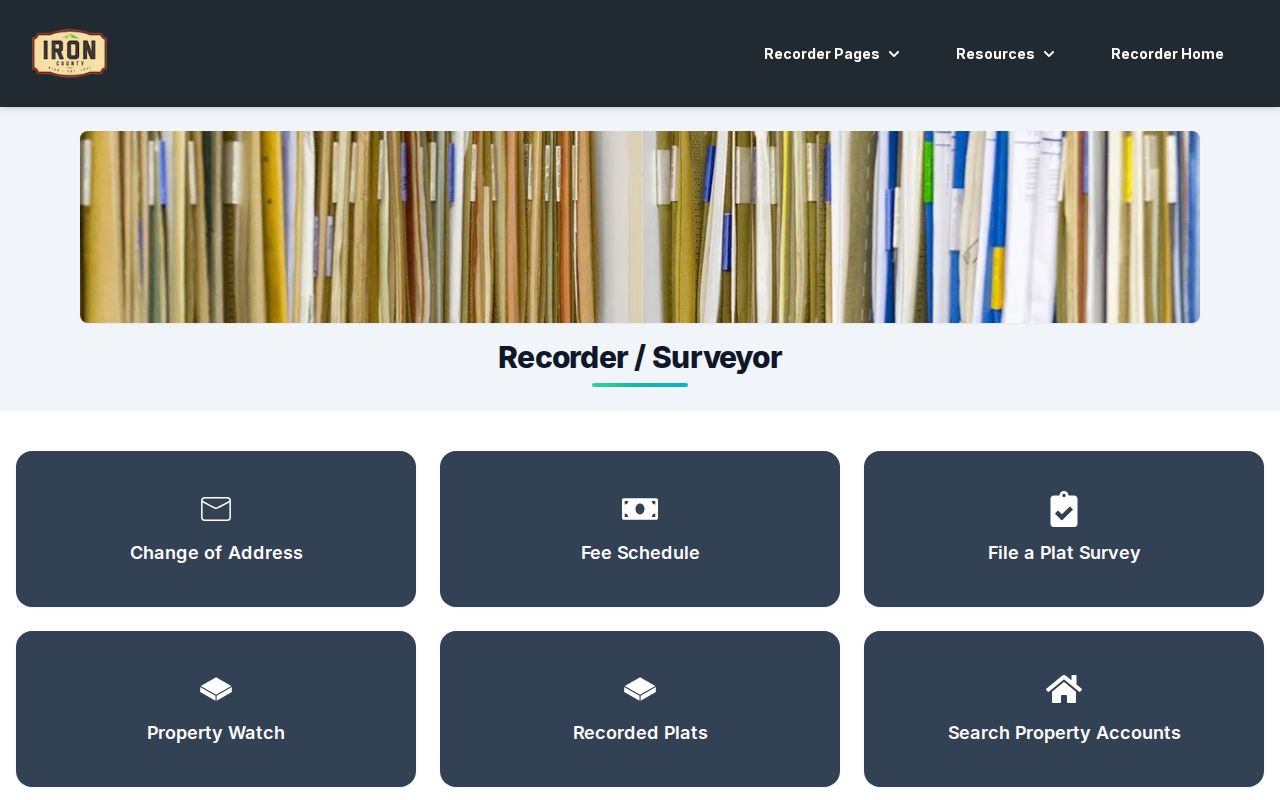
The Recorder's page is a resource index. It is not a deed image or a complete chain of title.
Archives Can Corroborate an Iron County Name
The Archives' searchable Iron County birth-register index covers 1898-1905. It can help separate people with similar names. It can also add family context to a probate trail. It is not a land-ownership index. Treat it as corroboration only. Tie any identity clue back to a recorded deed or probate document before crediting a person with a parcel. The Iron County searchable birth-register index is an archive reference for that narrow date range.
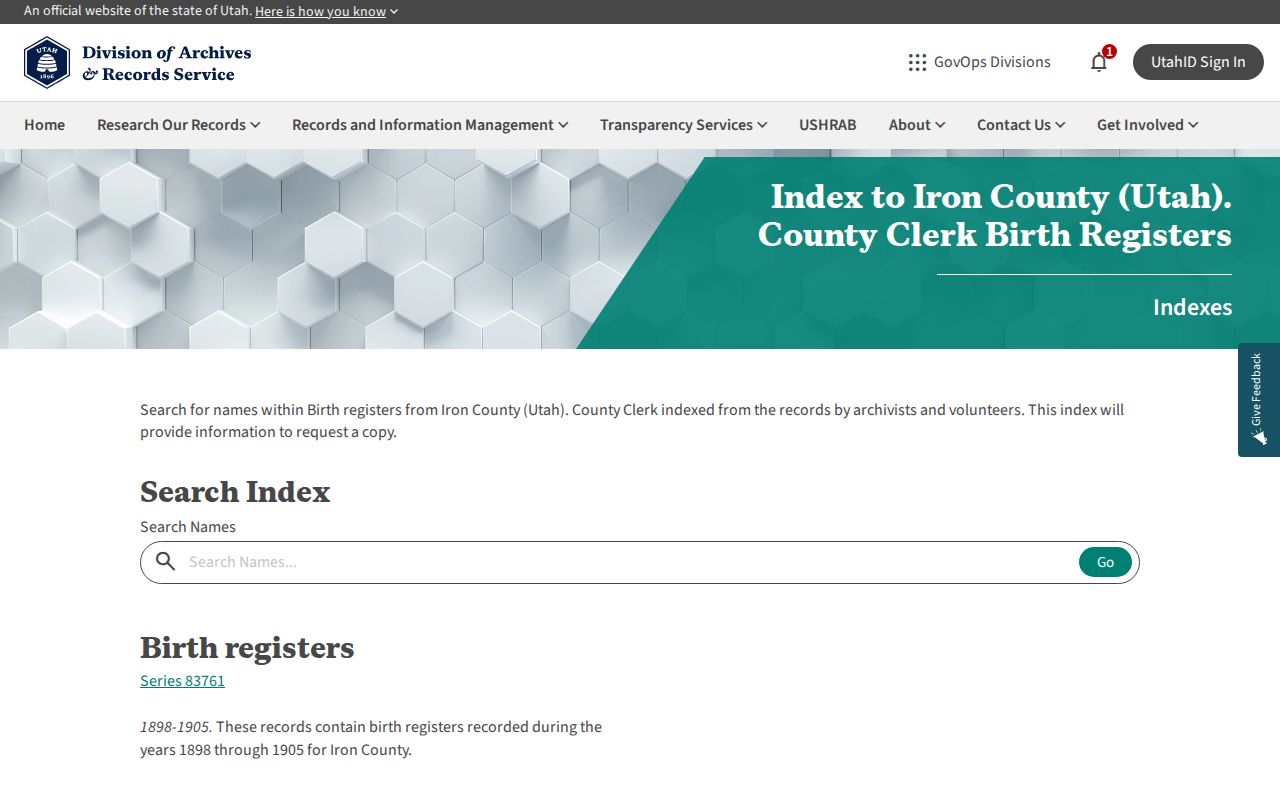
The index is a birth register. It is not a deed lookup or proof that someone owned a particular parcel. For a historic property, record the name variant, date, source series and parcel description. The goal is a traceable house history, not a people profile. One name appearing in several records does not prove each record belongs to the same person.
Build an Iron County Former-Owner Timeline From Original Records
Start with the Recorder's own entries. For every transfer, copy the grantor and grantee exactly as printed, the instrument type, the recording date, the book or instrument reference, and the legal description. Then compare that description against the next deed in the chain. Names repeat. Spellings shift. An estate or trust may sit between individual owners, so your Iron County property records timeline should cite the document behind each step. A tax account helps you find the current parcel, but it is not a complete chain of title.
When an online result leaves a gap, contact the Recorder with the party names you have, the parcel description, and an approximate date range, and ask how to reach an older index or copy. Copies run $1 per page under the current fee schedule. A probate transfer calls for a different path: search the Archives finding aid first, then request the case record from its custodian, because the listed series is not itself a land deed. Keep archival evidence, plats, and recorded instruments distinct. A family-history clue is not proof of ownership.
Next, set the parcel's lot or section description beside its current map context. A subdivision plat can explain why lot names changed. It cannot hand you each deed in sequence. Expect this record-by-record method to take more than one request, since the county's published materials do not state when its online deed index begins or how far its images reach. For an earlier gap, ask whether paper grantor or grantee indexes, deed books, or archived plats cover the years you need, and how the office prefers copy requests to be framed. Give both party names whenever possible, because searching only one side of a transfer can miss a differently indexed instrument. Write down any index volume or page reference before ordering, then check the document's legal description against the next instrument. The Recorder is the custodian of Iron County deed records, but only the office can confirm which historic index series survive for your period.
How Far Back Iron County Ownership Records Reach
The county publishes a modern Recorder index. It also holds an archival probate collection. Yet no source fixes the earliest deed book or a complete online cutoff. No firm "records begin in" year can be stated here. Ask the Recorder directly about older deed books, paper indexes, and plat repositories. Use Utah State Archives for the probate series it holds. Each trail covers a different span of years. Each serves a different purpose.
Lawful use. Use former-owner research for a house history, property diligence or title work with the right professional. Do not use a chain of names to track, stalk or harass anyone.